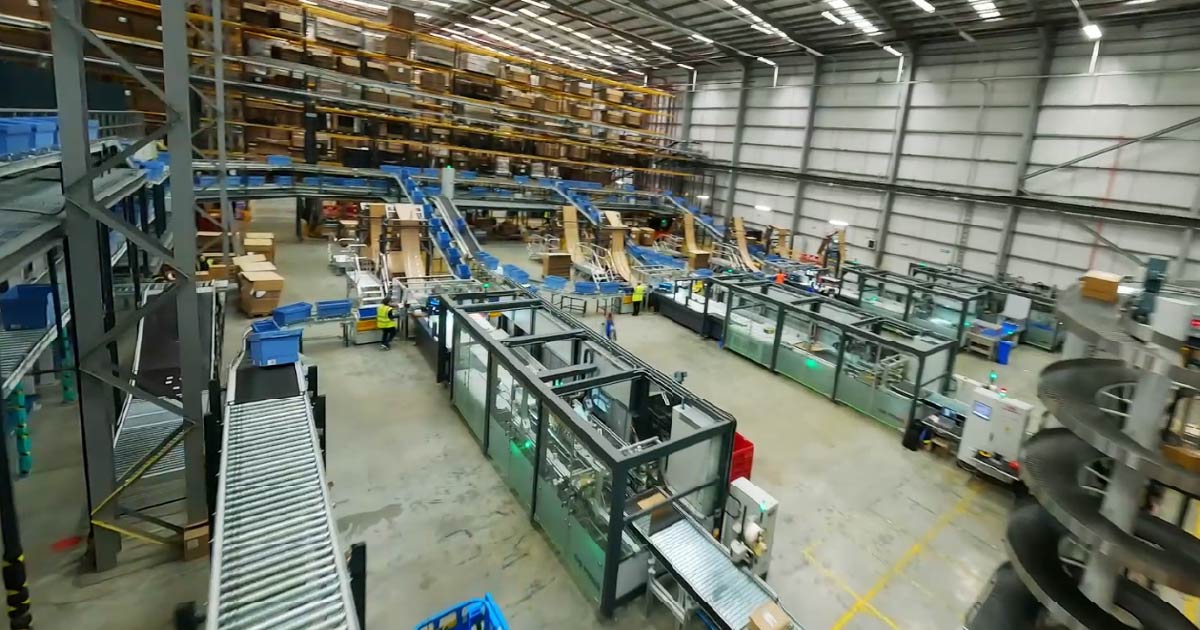
Modern fulfillment centers are built for speed, but speed alone isn’t enough to guarantee efficiency. One of the biggest challenges in high-volume automated operations is managing the flow of items to packing stations. The mismatch between how products arrive and how they need to be packed and shipped can cause delays. Inbound product flow often varies due to picking patterns and inventory distribution, while outbound operations require precise timing, order, and box selection. If these two flows don’t align, bottlenecks and downtime are inevitable.
Sequencing is the solution. It brings process control to variable inbound flow, ensuring that items arrive at packing stations in the correct order for efficient packing, right-sizing, and shipping. By controlling package movement through the system, sequencing helps companies protect throughput while creating a smoother path from order to shipment. When sequencing is done well and with the right technology, businesses can minimize the complexity of their packaging process and get the most out of their automated packaging solutions.
What is Sequencing?
Sequencing adds a layer between picking and packaging. Items enter the system in an unpredictable flow, influenced by order composition, SKU location, and pick density. Instead of letting this variability create chaos, sequencing systems orchestrate and expedite the packing process.
By syncing variability with precision, sequencing allows automated store and retrieval systems (ASRS) and automated right-size packaging to deliver consistent performance, increased efficiency, and better space utilization in modern fulfillment operations. With sequencing, Packsize customers can count on their packages arriving at the right place, at the right time, and in the right order.
How Sequencing Keeps Operations Moving
Items often arrive at the packing station without any clear order. Some orders may be complete, while others are partial, and arrival times can vary. Sequencing systems address this by creating space and time for reorganization using two key tools: buffers and holding loops.
A buffer is a temporary holding area for items, allowing a pause in the transfer from one stage to the next. We experience buffers daily, like when a video pauses to buffer before continuing smoothly. A holding loop functions similarly but keeps an item in place until the next stage is ready for it.
For Packsize, software determines the optimal release order within the buffer. Items are then delivered downstream in a controlled sequence that matches packing capacity and shipping needs. This approach minimizes idle time at packing stations and reduces the need for manual intervention when orders arrive out of sequence.
Right-Size Packaging and Sequencing
In automated right-sized packaging, sequencing becomes critical. Every order may need a different box size, produced on-demand. Without sequencing, this variability could cause delays or misrouting at induction points. Sequencing manages this variability by coordinating when and how packages enter the system.
By ensuring the correct box size is available at the packing station, sequencing enables automated packaging systems to operate at high throughput without increasing labor or floor space. This improves carton utilization and shipping consistency.
Enabling Right-Size Packaging at Scale
As e-commerce in the U.S. continues to grow, so does the pressure on fulfillment operations. Sequencing helps operations keep pace by controlling the flow of orders into packing. It ensures each order arrives at the right place and time, streamlining packaging automation without delays or disruptions.
Next generation ASRS, combined with modern buffers and holding loops, absorbs upstream variability and release orders in a steady, controlled flow. This keeps packing and shipping aligned, reduces congestion, and maintains throughput as volumes grow. The result is a more efficient, future-ready operation that scales without adding excess labor, space, or packaging.
The Takeaway
Sequencing often goes unnoticed when it’s working well. But it plays a vital role in keeping operations running smoothly, reducing friction, and ensuring consistent outcomes day after day. By syncing variability with precision, sequencing allows ASRS and automated right-size packaging systems to deliver consistent performance, increased efficiency, and better space utilization in modern fulfillment operations. With sequencing, Packsize customers can count on their packages arriving at the right place, at the right time, and in the right order.